1972
The Journey North
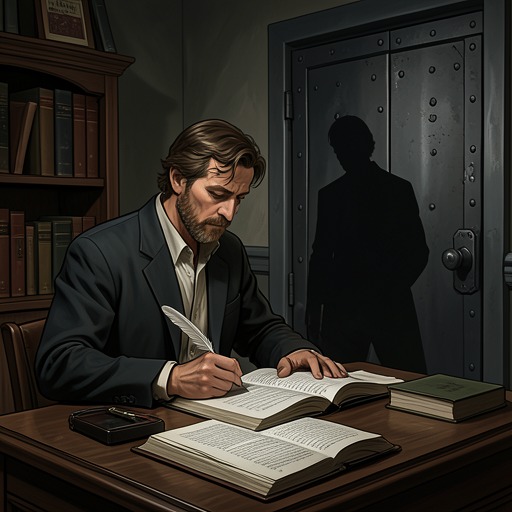
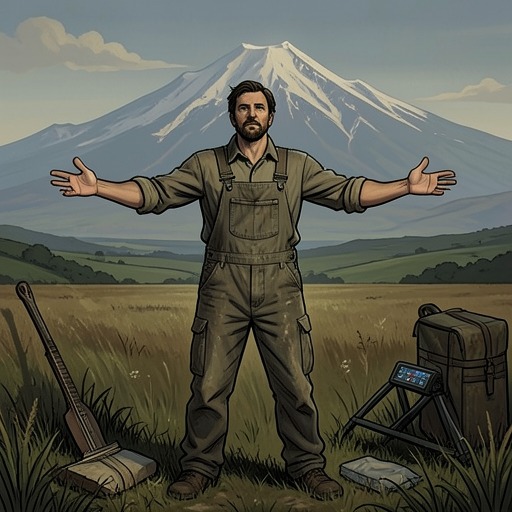
At twenty, John Shorey left farm work and headed for Fairbanks, Alaska, imagining college as a young man’s great adventure. His path soon took him to Ketchikan, where he worked as a logger while continuing his education during the off-season.
The restless independence his mother later described became, in his telling, a desire to follow [God](entity:character-recall-character-833766c1de3f) rather than the crowd. That conviction would frame the bold, sometimes controversial interpretations in the book.
1974
A Conversion in Ketchikan
While working as a logger, Shorey came to know [Jesus Christ](entity:character-recall-character-jesus-christ-1861cf215964) as his Savior. He continued attending the University of Alaska during the winter months when logging stopped.
The conversion became the starting point of a life he understood as service to [God](entity:character-recall-character-833766c1de3f). His later teaching treats readiness for the end times not as speculation alone, but as a question of faithfulness and personal commitment.
1976–1978
College and Courtship
Shorey began attending Northwest Bible College in Kirkland, Washington, in 1976. There he met Shawnette, whom he described as the girl of his dreams; they married in 1978.
Their family life gave shape to his later concerns about preparation and responsibility. He presents faith not as an abstract end-times position, but as a commitment involving the people entrusted to one’s care.
After 1978
A Life of Children's Ministry
Shorey and Shawnette raised two sons and devoted much of their service to children and families. They spent five years traveling as evangelists and later served for many years as children’s pastors, eventually residing in Arizona.
The book casts this ministry background as preparation for a wider assignment: Shorey believed he had been directed to communicate a warning and encouragement to Christians facing the Last Days.
Before this book
The First Book Assignment
Shorey sensed a strong spiritual prompting to write The Window of the Lord’s Return and completed it in what he regarded as obedience to [God](entity:character-recall-character-833766c1de3f). He had not expected to write another book.
Later, he believed a new study of Revelation required a wider audience. The present volume grew out of that conviction and extends the argument for a mid-tribulation rapture developed in his earlier work.
During the study of Revelation
The Mount Zion Puzzle
While working on his first book, Shorey was troubled by Revelation 14’s picture of the Lamb with the 144,000 on [Mount Zion](entity:location-recall-location-439411e2a76b). He believed [Jesus Christ](entity:character-recall-character-jesus-christ-1861cf215964)’s first return to the earth would be at the [Mount of Olives](entity:location-recall-location-469ff543afb9), so the Mount Zion scene seemed out of place in the sequence.
He kept rereading Revelation and praying for clarity. On a later reading, he concluded that parts of the book had been inserted outside their chronological position, and that this apparent disorder was obscuring the prophetic sequence.
After the Mount Zion puzzle
The Angelic Overlays
Shorey treated Revelation 11–14 as an angelic interruption that revisits events across a broad span of time. He also identified Revelation 17:1–19:10 as a second interruption, describing [Babylon](entity:location-recall-location-d433f2ebc42f) and the heavenly celebration before the rider on the white horse appears.
His proposed method was to leave the angel’s instructions about the [Little Scroll](entity:object-recall-object-little-scroll-869f28436b48) in place, move the out-of-sequence visions, and read them as overlays on the account he attributed to [Jesus Christ](entity:character-recall-character-jesus-christ-1861cf215964). He argued that this rearrangement added or removed no words, but made the events easier to follow.
During the same study
The Rapture Connection
To locate Revelation 17–19:10, Shorey compared its scenes of a great multitude, white garments, praise, and the Lamb’s marriage with Revelation 7. He concluded that the two passages described related heavenly scenes and that the [Babylon](entity:location-recall-location-d433f2ebc42f) material belonged before the gathering of the saints.
This reading became the central support for his claim that the Church is raptured after Babylon’s destruction and before the outpouring of [God](entity:character-recall-character-833766c1de3f)’s wrath. It also made his chronological arrangement, in his view, a case for the [Mid-tribulation rapture](entity:concept-recall-concept-mid-tribulation-raptu-ab95f020b316).
As Shorey develops his interpretation
Babylon and America
Shorey questioned the common identification of [Mystery Babylon](entity:expression-recall-expression-mystery-babylon-c0657cdea871) with geographic Iraq. He argued that the passages about a wealthy, influential city sitting on many waters sounded more like the [United States](entity:location-recall-location-5d55e9152db1), which he saw as a global power and protector of [Israel](entity:location-recall-location-e1a1566e26c9).
He acknowledged that the text’s charge of responsibility for the blood of prophets and saints troubled his interpretation. Still, he warned that if the United States were [Babylon](entity:location-recall-location-d433f2ebc42f), its destruction would precede the rapture and Christians should consider the possibility of severe national and economic upheaval.
Before the prophetic sequence
The Seventy Weeks Framework
Shorey interpreted [Daniel](entity:character-recall-character-63274be80b93)’s seventy weeks as a timetable in which the final week of years remains unfulfilled after the earlier sixty-nine weeks and the later destruction of the Temple. He read the final seven as a future period tied to a covenant confirmed by the [Antichrist](entity:character-recall-character-b8ac4133a2bc) and broken halfway through.
He called the whole span the Great Tribulation, while distinguishing its first half from the period of [God](entity:character-recall-character-833766c1de3f)’s wrath. In his account, the Antichrist’s war against the saints lasts forty-two months, and the rapture comes at the midpoint rather than at the end of the seven years.
Before the end-time events
The Prophecy Sealed for the End
Shorey linked the visions of [Daniel](entity:character-recall-character-63274be80b93) and [John the Apostle](entity:character-recall-character-c9b48567a0ee), emphasizing that both were told that aspects of their revelations would remain sealed until the time of the end. He believed that this period had arrived and that the book’s mysteries were being unveiled.
That conviction supplies the book’s urgency. Revelation, in his view, is neither irrelevant nor merely allegorical: it is a message for the Church that calls for careful reading, spiritual discernment, and readiness.
In the vision on Patmos
John Receives the Vision
[John the Apostle](entity:character-recall-character-c9b48567a0ee), exiled on [Patmos](entity:location-recall-location-patmos-a84a86387b89), was in the Spirit when he heard a voice like a trumpet and turned to see [Jesus Christ](entity:character-recall-character-jesus-christ-1861cf215964) among seven golden lampstands. He received instructions to write to seven churches, and the vision established the authority and scope of the revelation.
The book also says that the message came from [God](entity:character-recall-character-833766c1de3f) through Jesus Christ and was made known by an angel. Shorey used that detail to distinguish the principal vision from material he considered angelic insertions.
At the beginning of the vision
The Messages to the Churches
The messages address the [Church of Ephesus](entity:organization-recall-organization-church-of-ephesu-472bd5383650), [Church of Smyrna](entity:organization-recall-organization-church-of-smyrna-4d232dc2ca25), [Church of Pergamum](entity:organization-recall-organization-church-of-pergam-dc9d96566ecd), [Church of Thyatira](entity:organization-recall-organization-church-of-thyati-a4161b5adfcb), [Church of Sardis](entity:organization-recall-organization-church-of-sardis-f98e214eb64d), [Church of Philadelphia](entity:organization-recall-organization-church-of-philad-0cd8c2115cc0), and [Church of Laodicea](entity:organization-recall-organization-church-of-laodic-eaa18184ee4f). They praise endurance and faithfulness, condemn compromise and spiritual complacency, and call hearers to repent and overcome.
For Shorey, these addresses establish that Revelation speaks to the whole body of Christ as well as to future events. Their warnings about perseverance also foreshadow the trials he believes believers will face during the Great Tribulation.
Before the seals open
The Scroll and the Throne
John sees [God](entity:character-recall-character-833766c1de3f) enthroned amid the [Twenty-Four Elders](entity:character-recall-character-580fd6a78a4f) and the [Four Living Creatures around the Throne](entity:character-recall-character-7840707e3c9e). A scroll sealed with seven seals cannot be opened by anyone at first, until the Lamb appears as worthy to take it.
The heavenly assembly praises the Lamb, and Shorey treats this scene as the prelude to the end-time sequence. He particularly notes that the great multitude in white robes has not yet appeared, which he takes as evidence that the rapture has not happened at this point.
Before the first seal in Shorey’s arrangement
The Woman and the Dragon
John sees a woman in the heavens, pregnant and in anguish, while a red dragon waits to devour her child. She gives birth to a male child destined to rule the nations, who is caught up to [God](entity:character-recall-character-833766c1de3f) and his throne; the woman then flees to a place prepared for her in the wilderness.
Shorey reads the imagery as an overlay spanning past and future events, including the birth and exaltation of Christ and the later persecution of [Israel](entity:location-recall-location-e1a1566e26c9). He places the vision before the seals as a preview of the conflict that leads into the [Antichrist](entity:character-recall-character-b8ac4133a2bc)’s rise.
Before the Antichrist’s rise
War in Heaven
[Michael](entity:character-recall-character-756662928179) and his angels fight the dragon and cast [Satan](entity:character-recall-character-b63cf6814b32) and his angels out of heaven. A heavenly proclamation declares that the accuser has been thrown down, while warning the inhabitants of the earth that Satan has great wrath and little time.
Shorey places this expulsion before the [Antichrist](entity:character-recall-character-b8ac4133a2bc) is revealed. He sees the event as the beginning of Satan’s intensified attack on [God](entity:character-recall-character-833766c1de3f)’s people and as the reason the coming persecution becomes so fierce.
After Satan is cast down
The Dragon Pursues the Woman
The dragon turns against the woman and later makes war on the remnant of her offspring, identified in the vision by their obedience to [God](entity:character-recall-character-833766c1de3f) and testimony to [Jesus Christ](entity:character-recall-character-jesus-christ-1861cf215964). The woman is protected in the wilderness for a time, times, and half a time, while the conflict extends to the faithful.
Shorey reads this as a preview of [Satan](entity:character-recall-character-b63cf6814b32)’s campaign against [Israel](entity:location-recall-location-e1a1566e26c9) and the saints. It bridges the heavenly conflict to the earthly persecution that becomes explicit under the beast.
Before the first seal
The Beast Government Forms
A beast rises from the sea with seven heads and ten horns, representing the political power Shorey calls the [Beast government](entity:organization-recall-organization-beast-government-794ce7217e91). In his interpretation, it develops into a global order led by ten heads of state before power is consolidated in the [Antichrist](entity:character-recall-character-b8ac4133a2bc).
This political structure prepares the conditions for worldwide authority and enforced worship. Shorey links its formation to the final end-time crisis rather than treating the image as a detached symbol.
At the beginning of the seven-year period
The First Seal Opens
The Lamb opens the first seal, and a rider on a white horse goes out conquering. Shorey identifies this rider with the emergence of the [Antichrist](entity:character-recall-character-b8ac4133a2bc), connecting the seal to the beast’s wounded head that recovers and astonishes the world.
In his reading, the recovery elevates one of the global leaders into the dominant figure of the [Beast government](entity:organization-recall-organization-beast-government-794ce7217e91). The opening of the seal therefore marks the visible beginning of the Antichrist’s rule and the unfolding Great Tribulation.
First half of the Great Tribulation
The Beast Wars on the Saints
The beast speaks blasphemies, receives authority for forty-two months, and makes war on the saints. The second beast, whom Shorey identifies as the [False Prophet](entity:character-recall-character-4196d18c8b21), promotes worship of the first beast, performs signs, and compels people to honor its image.
The system threatens death for those who refuse and restricts buying and selling through the mark. Shorey treats the command not to take the mark as a decisive test of Christian allegiance during the coming persecution.
During the early tribulation
An Angel Proclaims the Gospel
An angel flies through the heavens with the everlasting gospel for every nation, language, and people. The proclamation calls the inhabitants of the earth to fear [God](entity:character-recall-character-833766c1de3f), give him glory, and worship the Creator as the hour of judgment approaches.
Shorey places this warning amid the pressure of the beast’s campaign, when the preaching of God’s word is being suppressed. He interprets it as a divine appeal for repentance before the judgments intensify.
Around the midpoint of the seven-year period
The Two Witnesses Begin Their Ministry
The [Two Witnesses](entity:character-recall-character-e2fc3e693209) appear and prophesy for 1,260 days, clothed in sackcloth. They can consume attackers with fire, withhold rain, turn waters to blood, and strike the earth with plagues as often as they choose.
Shorey places their arrival shortly before the midpoint of the seven years, around the period when the 144,000 are sealed. Their ministry spans three and a half years and overlaps the later judgments, so the account also anticipates events well beyond the point at which it is inserted.
After the first seal
The Second Seal Takes Peace
The second seal releases a red horse whose rider takes peace from the earth and turns people against one another. Shorey reads the image as an escalation into violence and social breakdown.
This upheaval sets the conditions for the scarcity that follows. In his commentary, he imagines believers using whatever resources they have to help the less fortunate and share their faith.
After the second seal
The Third Seal Brings Scarcity
At the third seal, a black horse appears with scales, and basic grain costs a day’s wages. The warning not to damage the oil and wine accompanies a vision of unequal hardship and constrained supplies.
Shorey interprets the scene as famine and anarchy, with people struggling to obtain food. He argues that Christians who have prepared could serve neighbors in need rather than retreat into self-preservation.
After the third seal
The Fourth Seal Brings Death
The fourth seal releases a pale horse named Death, followed by Hades. Its riders receive power over a fourth of the earth to kill through sword, famine, plague, and wild beasts.
Shorey sees war as the force behind this broad devastation, with famine and disease following in its wake. The scale of death deepens the ordeal facing the saints and the wider world.
After the fourth seal
The Martyrs Cry for Justice
At the fifth seal, John sees the souls of those slain for [God](entity:character-recall-character-833766c1de3f)’s word and their testimony beneath the altar. They ask how long judgment and vengeance will be delayed, and each receives a white robe and an instruction to wait until the full number of fellow servants has been killed.
Shorey emphasizes this scene as evidence that believers will face real persecution before the rapture. He also presents the martyrs’ hope as a reminder that death does not undo their faithfulness.
Near the midpoint of the Great Tribulation
The Sixth Seal Shakes the Heavens
The sixth seal brings a great earthquake, a darkened sun, a blood-red moon, falling stars, and the apparent rolling back of the heavens. The powerful and the ordinary alike hide from the face of the one on the throne and from the wrath of the Lamb.
Shorey compares these signs with the language of Matthew and Joel, identifying them as the Day of the Lord and as the final cosmic warning before the gathering of the elect. He sees this moment as making the rapture imminent, even though its exact day and hour remain unknown.
After the sixth seal and before the rapture
The 144,000 Are Sealed
Four angels hold back the winds and are told not to harm the earth, sea, or trees until [God](entity:character-recall-character-833766c1de3f)’s servants have been sealed. John hears the number: 144,000 from the tribes of [Israel](entity:location-recall-location-e1a1566e26c9).
Shorey places this sealing before the rapture and before the trumpet judgments begin. He suggests that the four angels may be connected with the first four trumpet angels, whose destructive work must wait until the servants are marked as belonging to God.
Before the rapture
Babylon Falls
Angelic announcements declare [Babylon](entity:location-recall-location-d433f2ebc42f) fallen and warn that those who worship the beast or receive its mark will face the wrath of [God](entity:character-recall-character-833766c1de3f). A further vision describes the great prostitute, her alliance with the beast, and the judgment that destroys her.
Shorey reads Babylon as a corrupting world power and argues that its destruction precedes the rapture. He particularly advances the possibility that the [United States](entity:location-recall-location-5d55e9152db1) is [Mystery Babylon](entity:expression-recall-expression-mystery-babylon-c0657cdea871), while acknowledging that readers may disagree with his identification.
As Babylon’s judgment approaches
The Call to Leave Babylon
A voice from heaven calls [God](entity:character-recall-character-833766c1de3f)’s people to come out of [Babylon](entity:location-recall-location-d433f2ebc42f) so that they do not share in her sins or her plagues. The city’s fall brings mourning from rulers and merchants, while heaven is told to rejoice that God has avenged the blood of his servants.
For Shorey, this passage supports the claim that the saints remain on earth through Babylon’s destruction and must endure the crisis with patience. In his interpretation, the warning belongs before the gathering of the Church, not after the end of God’s wrath.
After Babylon’s fall and before the rapture
The Lamb Reaps the Earth
A figure like the Son of Man appears on a white cloud with a golden crown and a sharp sickle. At an angel’s command, he harvests the ripe earth.
Shorey identifies this first harvest with the gathering of the faithful. He links it to the subsequent vision of a great multitude in white robes before the throne, making the harvest a key sign in his chronology of the rapture.
At the midpoint of the Great Tribulation
The Saints Gather Before the Throne
A countless multitude from every nation stands before [God](entity:character-recall-character-833766c1de3f) and the Lamb in white robes, praising God for salvation. One of the elders explains that they have come out of the Great Tribulation and washed their robes in the blood of the Lamb.
Shorey identifies the sudden appearance of this multitude as the rapture of the Church. He connects their white garments and praise with the wedding imagery in Revelation 19, and places their arrival after [Babylon](entity:location-recall-location-d433f2ebc42f)’s destruction but before the outpouring of divine wrath.
Immediately after the saints gather
Heaven Falls Silent
When the seventh seal opens, heaven is silent for about half an hour. Shorey imagines the silence as the awe of the newly arrived saints and heavenly beings before the Father welcomes the Son’s bride.
He places the scene at the threshold of the trumpet judgments. The pause marks a transition from the saints’ deliverance to the release of [God](entity:character-recall-character-833766c1de3f)’s wrath on the earth.
At the transition to the trumpet judgments
The Elders Announce Judgment
The [Twenty-Four Elders](entity:character-recall-character-580fd6a78a4f) fall before [God](entity:character-recall-character-833766c1de3f) and praise him for taking his power and beginning to reign. Their proclamation speaks of the time to judge the dead, reward the prophets and saints, and destroy those who destroy the earth.
Shorey places this passage between the seventh seal and the trumpet sequence. He sees its words about reward and wrath, together with the heavenly signs that follow, as confirming the transition from the rapture to judgment.
After the rapture
The Trumpet Judgments Begin
Seven angels receive trumpets, and an angel casts fire from the altar to the earth amid thunder, lightning, and an earthquake. The first four trumpets bring hail and fire, a burning mass thrown into the sea, poisoned waters, and darkness across part of the heavens.
Shorey treats these disasters as the opening phase of [God](entity:character-recall-character-833766c1de3f)’s wrath, following the sealing of the 144,000 and the rapture. After the first four blasts, an angel warns that the remaining trumpet woes will be worse.
During the fifth trumpet
The Abyss Releases Its Locusts
At the fifth trumpet, a star opens the [Abyss](entity:location-recall-location-1fd49f851624) and smoke darkens the air. Locust-like creatures emerge with power to torment those without [God](entity:character-recall-character-833766c1de3f)’s seal, but not to kill them; their torment lasts five months and drives people to seek death.
Shorey stresses the duration and severity of this woe when arguing that God’s wrath cannot be reduced to a brief interval. The torment is both physical punishment and a striking contrast with the protection given to those sealed by God.
During the sixth trumpet
The Euphrates Army Advances
The sixth trumpet releases four bound angels at the [Euphrates River](entity:location-recall-location-f732cbe2e378), prepared for a specific hour, day, month, and year. An immense army brings fire, smoke, and sulfur, killing a third of humankind; the survivors still refuse to repent of their violence and idolatry.
Shorey interprets the timed release as a prolonged military catastrophe, possibly lasting about a year. Its failure to turn survivors toward repentance underscores the spiritual hardening at the center of the judgments.
After the sixth trumpet
John Receives the Little Scroll
A mighty angel gives [John the Apostle](entity:character-recall-character-c9b48567a0ee) an open [Little Scroll](entity:object-recall-object-little-scroll-869f28436b48). John eats it; it tastes sweet in his mouth but turns bitter in his stomach, and he is told that he must prophesy again before peoples, nations, languages, and kings.
Shorey leaves this episode in its original place, treating it as the explanation for how the supplementary prophecies entered John’s account. The command to prophesy again underpins his theory that the following visions revisit events outside their chronological sequence.
After the sixth trumpet
The Seventh Trumpet Proclaims the Kingdom
The seventh angel sounds, and voices in heaven proclaim that the kingdoms of the world have become the kingdom of [God](entity:character-recall-character-833766c1de3f) and of Christ. The announcement looks ahead to divine rule even as the judgments continue.
Shorey reads the trumpet as a heavenly declaration occurring amid the period of wrath, rather than as the end of every earthly judgment. He links its proclamation to the mystery of God being completed and to the promised reign of Christ.
After the trumpet judgments
The Seven Bowls Are Poured Out
Seven angels pour out the final plagues: painful sores, blood in the sea and waters, scorching heat, darkness over the beast’s kingdom, and the drying of the [Euphrates River](entity:location-recall-location-f732cbe2e378). Unclean spirits gather the rulers of the earth for [Armageddon](entity:location-recall-location-647b15cad0ab), and the seventh bowl brings a catastrophic earthquake, collapsing cities, and immense hail.
Shorey understands the bowls as the completion of [God](entity:character-recall-character-833766c1de3f)’s wrath, not its entirety, since he reads the preceding trumpets as earlier judgments. At the end of the sequence, the declaration “It is done” clears the way for Christ’s return and the final battle.
Near the end of the three-and-a-half-year ministry
The Witnesses Rise Again
After finishing their testimony, the [Two Witnesses](entity:character-recall-character-e2fc3e693209) are killed by the beast and left in the street for three and a half days. The people celebrate their deaths, but the witnesses stand when the breath of life enters them and are summoned to heaven; a great earthquake follows.
Shorey places their deaths and resurrection near the seventh bowl, because he connects the earthquake with the final judgment’s upheaval. Their ministry thus begins before the rapture in his chronology but reaches its climax near the end of the seven-year period.
After the seven bowls
Christ Descends to Armageddon
Heaven opens, and [Jesus Christ](entity:character-recall-character-jesus-christ-1861cf215964) rides a white horse, called Faithful and True, with the armies of heaven following. The beast and the kings of the earth gather to fight him, but the beast and the [False Prophet](entity:character-recall-character-4196d18c8b21) are captured and cast into the [Lake of Fire](entity:location-recall-location-fe3b6967c2c7); the remaining armies are slain.
Shorey treats this return as the decisive end of the beast’s power and the culmination of the judgments. The battle fulfills the gathering at [Armageddon](entity:location-recall-location-647b15cad0ab) and ushers in the defeat of [Satan](entity:character-recall-character-b63cf6814b32)’s earthly allies.
During the final battle
The Winepress of Wrath
A heavenly angel gathers the grapes of the earth and casts them into the great winepress of [God](entity:character-recall-character-833766c1de3f)’s wrath. Blood flows from the winepress as high as the horses’ bridles and across an immense distance.
Shorey reads this vision as an account of the destruction of the unrepentant and the armies assembled against Christ. He places it alongside the battle scenes as a second image of the judgment that accompanies the return.
After the battle of Armageddon
Satan Is Bound
An angel seizes [Satan](entity:character-recall-character-b63cf6814b32), binds him with a great chain, and confines him in the [Abyss](entity:location-recall-location-1fd49f851624) for a thousand years so that he cannot deceive the nations. The beast and the [False Prophet](entity:character-recall-character-4196d18c8b21) have already been consigned to the [Lake of Fire](entity:location-recall-location-fe3b6967c2c7).
Shorey presents the binding as the threshold of Christ’s millennial rule. With Satan restrained, the scene turns from the defeat of rebellion to the reign and judgment of Christ.
After Armageddon and Satan’s binding
The Lamb Meets the 144,000
The Lamb stands on [Mount Zion](entity:location-recall-location-439411e2a76b) with the 144,000, who bear the Father’s name and sing a new song before the throne. Shorey interprets the scene as a special meeting after the battle, honoring those sealed for a particular mission.
He places the vision between [Satan](entity:character-recall-character-b63cf6814b32)’s confinement and the vision of the thrones, treating it as a transition from the battlefield to heavenly worship. This is distinct from the earlier sealing of the 144,000, which he places before the rapture.
At the beginning of the thousand years
The First Resurrection and Reign
John sees thrones and the souls of those beheaded for their testimony to [Jesus Christ](entity:character-recall-character-jesus-christ-1861cf215964), especially those who refused the beast, its image, and its mark. They live and reign with Christ for a thousand years, while the rest of the dead await the end of that period.
Shorey presents this as vindication for those who endured persecution rather than submitting to the beast. Their reign begins the millennial kingdom and marks the first resurrection in the sequence he describes.
The thousand years after Armageddon
The Millennial Kingdom
Christ and the faithful reign for a thousand years while [Satan](entity:character-recall-character-b63cf6814b32) remains confined. Shorey describes the earth as repopulated by mortals during this period, leaving later generations with a choice about whether to stand with [God](entity:character-recall-character-833766c1de3f).
The long peace does not erase human susceptibility to deception. In the book’s account, the final test comes when Satan is released after the thousand years have expired.
After the thousand years
Satan’s Final Rebellion
[Satan](entity:character-recall-character-b63cf6814b32) is released from prison and deceives nations in the four corners of the earth, gathering them for battle against the camp of the saints and the beloved city. Fire comes down from heaven and consumes the rebels, and Satan is cast into the [Lake of Fire](entity:location-recall-location-fe3b6967c2c7).
Shorey sees the revolt as the final demonstration that even a long era of peace cannot make rebellion impossible. Its swift defeat ends Satan’s role in the story permanently.
After Satan’s final rebellion
The Great White Throne
The dead stand before the [Great White Throne](entity:object-recall-object-great-white-throne-e0a0b3b56aa4) as the books are opened, including the [Book of Life](entity:object-recall-object-book-of-life-b41e28a5fc03). The sea, death, and Hades give up the dead, who are judged according to their works; death and Hades are then cast into the [Lake of Fire](entity:location-recall-location-fe3b6967c2c7).
Shorey makes the judgment a final dividing line: those not found in the Book of Life face the second death. He uses the scene to urge readers to seek forgiveness through [Jesus Christ](entity:character-recall-character-jesus-christ-1861cf215964) rather than rely on their own merits.
After the final judgment
The New Creation Appears
A new heaven and a new earth replace the former creation, and [New Jerusalem](entity:location-recall-location-4c51bff05294) descends from [God](entity:character-recall-character-833766c1de3f). God dwells with his people, wipes away their tears, and ends death, sorrow, crying, and pain.
The vision closes the prophetic arc with a home for those who remain faithful. Shorey describes its promise as beyond imagination and as assurance that suffering for Christ will not be the last word.
January 2014
Shorey Publishes the Chronology
Shorey presents his rearranged reading of Revelation as a practical guide, with references that allow readers to follow the proposed chronology in any translation. Letters from readers praise the arrangement for making the book seem clearer, while Shorey urges readers to test his conclusions against Scripture.
He closes by insisting that his interpretation is a study rather than a substitute for personal discernment. Its organizing claim remains that angelic interruptions function as overlays and that the resulting sequence supports a mid-tribulation rapture.
In the book’s closing counsel
The Call to Prepare
Shorey warns that economic collapse and persecution could leave believers unprepared, and urges readers to watch, prepare, and take responsibility for their families. He compares that foresight to [Noah](entity:character-recall-character-49d736cd22eb) building an ark before the flood and points to the widow who shared her last food with [Elijah](entity:character-recall-character-71f2c017591c) as a model of trust and generosity.
He also urges churches to consider feeding hungry neighbors and sharing the gospel, while rejecting a survival-at-any-cost mindset. The book ends by directing readers toward repentance, belief in [Jesus Christ](entity:character-recall-character-jesus-christ-1861cf215964), service to others, and hope of hearing the words, “Well done, good and faithful servant.”